
Carrot Benefits
Carrots are one of the most popular and versatile vegetables, and for good reason. They are incredibly nutritious, offering a wide range of health benefits that go far beyond the old saying about helping you see in the dark.


Carrots are a nutritious, low-calorie vegetable packed with vitamins, minerals, fiber, and antioxidants. Some of their key health benefits include:
- Supports eye health: Rich in beta-carotene, which your body converts to vitamin A, helping maintain good vision, especially in low light.
- Boosts immunity: Vitamin A, vitamin C, and antioxidants help support a healthy immune system.
- Promotes healthy skin: Beta-carotene and antioxidants help protect skin from damage and support skin repair.
- Good for heart health: Fiber and potassium may help lower cholesterol and support healthy blood pressure.
- Aids digestion: The fiber in carrots promotes healthy digestion and helps prevent constipation.
- Helps with weight management: Low in calories but high in fiber, carrots help you feel full for longer.
- Supports bone health: They provide vitamin K and small amounts of calcium, which contribute to healthy bones.
- May reduce the risk of chronic diseases: Antioxidants such as beta-carotene and lutein help protect cells from oxidative stress.
Nutrition (per 100 g of raw carrots):
- Calories: ~41
- Fiber: ~2.8 g
- Vitamin A: Over 300% of the daily requirement (from beta-carotene)
- Vitamin K
- Potassium
- Vitamin C (small amount)
Tips to get the most benefits:
- Eat carrots both raw and cooked. Cooking can increase the availability of beta-carotene.
- Pair them with a small amount of healthy fat (such as olive oil, nuts, or avocado) to improve absorption of vitamin A.
Eating one medium carrot or about half a cup of chopped carrots daily is a simple way to add valuable nutrients to your diet.
...........
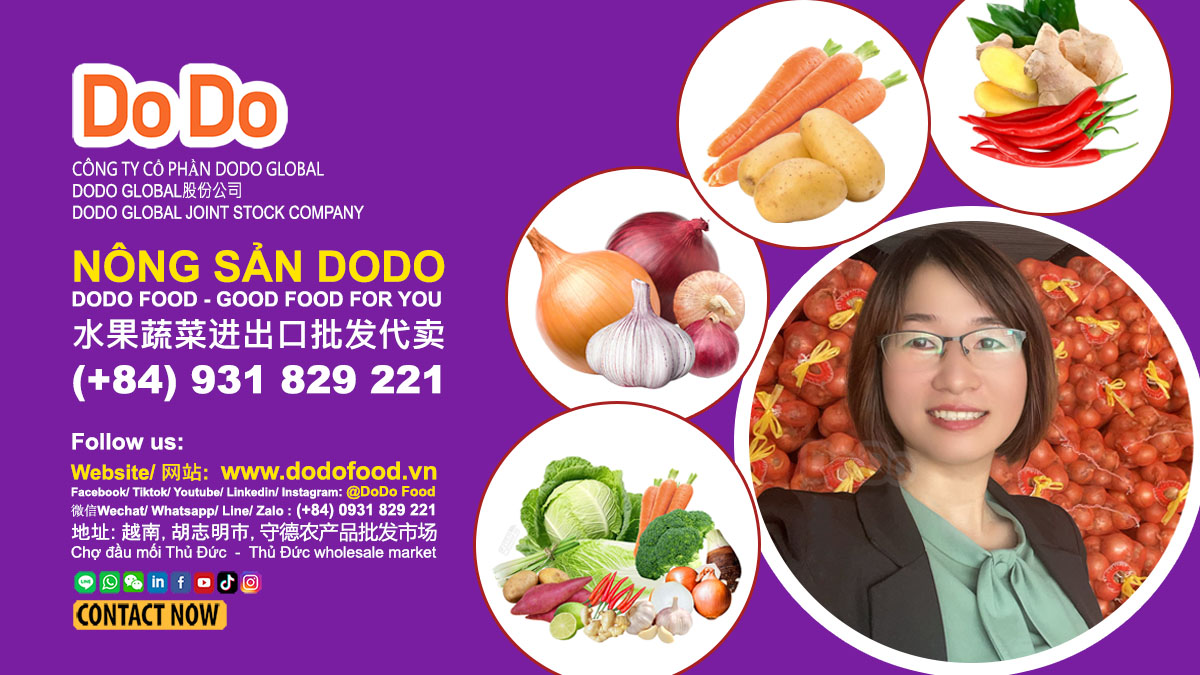
Công ty cổ phần DoDo Global một trong những đơn vị chuyên về xuất nhập khẩu, phân phối và mua bán hành tây, tỏi , rau củ quả tại Việt Nam. Với nhiều năm kinh nghiệm trong lĩnh vực nông sản, đặc biệt là tỏi và hành tây, gừng, ớt, nông sản. DODO đã khẳng định vị thế của mình trên thị trường trong nước và quốc tế.
DODO chia sẻ những sản phẩm tốt nhất, giá cả tốt nhất và phục vụ tốt nhất tới khách hàng.
Hiện tại DODO đã có hơn 2 triệu người theo dõi DODO trên các mạng xã hội như:
Facebook, Youtube, Tiktok, Instagarm, Linhkedin... để tất cả mọi người để tìm kiếm DODO.
...........
DODO Global 股份公司在越南专业做进出口, 批发公司:洋葱,大蒜, 土豆, 胡萝卜, 蔬菜.
DODO在农业市场上拥有强大的影响力,为国内外买家提供高质量的大蒜、洋葱、土豆、生姜、辣椒、胡萝卜、蔬菜和水果,确保价格竞争力强且来源可靠,并出口越南农产品。
我们在网站、Facebook、YouTube、Tiktok、Instagram、LinkedIn 等平台上拥有营销系统,
拥有超过 200 万粉丝。我们在网站, 电子商务 卖产品
- 采购与贸易:与农民和全球供应商合作,提供优质产品
...........
DODO Global Joint Stock Company is a reputable company specialising in importing, exporting, wholesale, and distributing in Vietnam. With a strong presence in the agricultural market, DODO supplies high-quality Vegetables (garlic, onions, potatoes, ginger, chilli, and carrots) and fruit for domestic and international buyers, ensuring competitive prices and reliable sourcing. and export Vietnam Agriculture.
DODO is committed to providing its customers with the best products, prices, and service.
You can now find DODO on social media platforms, including Facebook, YouTube, TikTok,
Instagram and LinkedIn, where we have a community of over 2 million followers.
If you want to talk business? Let's connect/联系/ Liên hệ:
Wechat 微信/ Whatsapp/ Line/ Viber/ Kakao talk: +84 0931 829 221
Email: dodofoods.vn@gmail.com
............................
Follow us on/ 关注我们/ Theo dõi chúng tôi:
Website: https: https://dodofood.vn/
Tiktok : https://www.tiktok.com/@dodoglobalfood
https://www.tiktok.com/@greenhousesg
YouTube: https://www.youtube.com/@DodoGlobal
Instagram: https://www.instagram.com/dodoglobalfood
https://www.instagram.com/greenfarmforum
Facebook: https://www.facebook.com/DoDoGlobalFood/
LinkedIn: https://www.linkedin.com/company/dodo-food/
https://www.linkedin.com/company/green-farm-forum/
Danh mục
Danh mục! Chưa được thiết lập.


