
Building a brand, elevating the value of Vietnamese agricultural products
This is an excellent and highly relevant topic. Building a brand and elevating the value of Vietnamese agricultural products is not just an economic goal; it is a strategic imperative for Vietnam's sustainable development.
Here is a comprehensive analysis of the challenges, strategic pillars, and actionable steps required to achieve this transformation.
The Core Challenge: From Volume to Value
Vietnam is a world-leading exporter of many commodities (rice, coffee, cashews, pepper, seafood). However, the majority of its agricultural products are exported as raw or semi-processed commodities under foreign brands (e.g., coffee for Nestlé, cashews for European snack brands). This results in the "Vietnamese farmer gets the least, the foreign brand gets the most" paradox. The key is shifting from selling "what" (a commodity like brown rice) to selling "why" (a story, a standard, an experience like Organic fragrant rice from the Tam Nong plain).
Three Strategic Pillars for Brand Elevation
Pillar 1: Identity & Traceability (The "Who" and "Where")
A brand without an origin story and verifiable quality is just a product.
-
Geographical Indications (GIs): Strongly promote and protect GIs like Phu Quoc fish sauce, Buon Ma Thuot coffee, Thanh Ha lychee. A GI immediately signals unique, place-based quality.
-
Storytelling & Heritage: Move beyond generic claims ("natural," "delicious"). Craft narratives around:
-
Ethnic minority farming traditions (e.g., Shan Tuyet tea harvested by Dao people).
-
Unique ecosystems (e.g., rice grown in the flooded forests of the Mekong Delta).
-
Post-war resilience (e.g., coastal shrimp farming communities).
-
-
Digital Traceability: Implement blockchain or QR code systems. Consumers in Tokyo or New York should scan a code on a Vietnamese mango and see: Farm location, harvest date, organic certification, carbon footprint, farmer's name.
Pillar 2: Quality & Standardization (The "What")
Brands are built on consistent, reliable quality. Commodities are inconsistent.
-
Collective Ownership of Standards: Move away from millions of small, fragmented farms. Establish Farmer Cooperatives that own and enforce a single quality standard, packing house, and brand.
-
Certification as a Brand Asset:
-
GlobalG.A.P., Organic (USDA/EU), Rainforest Alliance, Fair Trade – these aren't just certificates; they are trust badges that command premium prices.
-
Domestic standards (VietGAP): Strengthen enforcement and consumer awareness.
-
-
Grade Your Products, Don't Dump Them: Instead of mixing all rice or coffee together, grade into tier 1 (whole, perfect, export premium), tier 2 (processing), tier 3 (domestic/animal feed). Only tier 1 carries the premium brand.
Pillar 3: Market Positioning & Distribution (The "Where" and "How Much")
A premium brand cannot be sold solely through bulk commodity channels.
-
Value-Added Processing: The most direct route to higher value.
-
Coffee: → roasted, ground, single-origin capsules, cold brew concentrate.
-
Fruit: → dried chips, puree, juice concentrate, freeze-dried snacks.
-
Rice: → organic, GABA brown rice, ready-to-eat rice meals, rice flour for gluten-free baking.
-
Coconut: → virgin coconut oil, coconut water, activated charcoal, coconut sugar.
-
-
Channel Strategy:
-
Domestic:
-
High-end retail: WinMart, Aeon, Annam Gourmet (position as premium local).
-
E-commerce: Tiki, Lazada, Shopee – use livestreaming and farmer stories.
-
HORECA (Hotels/Restaurants/Cafes): Partner with 5-star hotels and Vietnamese fine-dining restaurants.
-
-
Export:
-
Niche distributors in target markets (e.g., Asian grocery chains, organic specialty stores in EU, Japanese department store food halls).
-
Direct-to-Consumer (D2C) via Amazon Global Selling or a localized web store (high margin, full brand control).
-
-
-
Country-of-Origin Branding: Joint marketing under "Vietnam: The Essence of the Tropics" or "Vietnam: The Spice of Asia" at trade fairs (Gulfood, SIAL, Anuga).
Practical Action Plan for Stakeholders
| Actor | Key Actions to Elevate Value |
|---|---|
| Government (Policy) | - Enforce GI protection and traceability laws. - Invest in cold chain logistics (Mekong Delta). - Provide tax incentives for processing facilities, not raw exports. - Certify "National Brand" products (like "Vietnam Value" program). |
| Farmers & Cooperatives | - Adopt GAP and organic practices - Form cooperatives to achieve scale and build a shared brand (e.g., "Mekong Dragon Mango Cooperative"). - Post-harvest handling training to reduce loss. |
| Entrepreneurs & Processors | - Invest in R&D for unique products (e.g., rice milk, fruit leather, coffee kombucha). - Design modern, high-quality packaging (explain how to use a new product like turmeric juice). - Build B2B brands for ingredient supply. |
| Marketing & Exporters | - Hire professional food photographers and copywriters. - Attend specialized trade shows (organic, specialty coffee/food). - Use social media (TikTok, Instagram) for "farm-to-table" videos. |
Real-World Vietnamese Success to Emulate
-
TH True Milk: Built a premium brand based on clean, high-tech farming and a powerful narrative ("Clean food from Mother Nature"). They own the entire chain.
-
Marou Chocolate: Took single-origin Vietnamese cacao and created a world-class bean-to-bar chocolate brand sold in Paris, Tokyo, and New York. They succeeded by processing locally and owning the final consumer brand.
-
L'angfarm: Dominates the premium dried fruit and nut space domestically through a retail chain and rigorous quality.
-
PhinDeli: Successfully marketed Vietnamese coffee as a ready-to-drink canned product in the US, leveraging the "phin filter" cultural story.
The Final Word
Elevating Vietnamese agricultural products requires a shift in mindset from "farmer" to "food brand entrepreneur." It means rejecting the low-road of volume and embracing the high-road of story, quality, and traceability. The market is ready to pay more for an authentic, delicious, and responsible product – and Vietnam has countless such stories to tell. The nation that brings its cà phê sữa đá and xoài cát Hòa Lộc to the world as brands, not boxes, will harvest true, sustainable prosperity.
...........
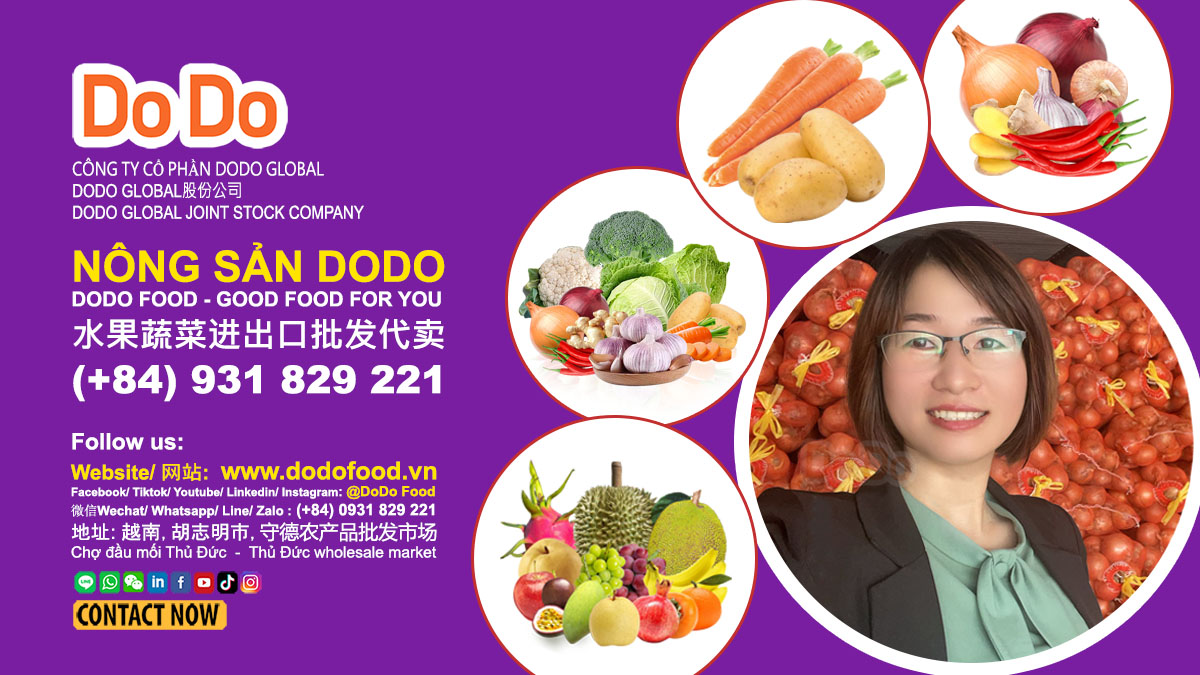
Công ty cổ phần DoDo Global là một trong những đơn vị chuyên về xuất nhập khẩu, phân phối và mua bán khoai tây , cà rốt, hành tây, tỏi , rau củ quả tại Việt Nam. Với nhiều năm kinh nghiệm trong lĩnh vực nông sản, đặc biệt là tỏi và hành tây, gừng, ớt, nông sản. DODO đã khẳng định vị thế của mình trên thị trường trong nước và quốc tế.
DODO chia sẻ những sản phẩm tốt nhất, giá cả tốt nhất và phục vụ tốt nhất tới khách hàng.
Hiện tại DODO đã có hơn 2 triệu người theo dõi DODO trên các mạng xã hội như:
Facebook, Youtube, Tiktok, Instagarm, Linhkedin... để tất cả mọi người để tìm kiếm DODO.
...........
DODO Global Joint Stock Company is a reputable company specialising in importing, exporting, wholesale, and distributing in Vietnam. With a strong presence in the agricultural market, DODO supplies high-quality Vegetables (garlic, onion, potato, ginger, chilli, and carrot...) and fruit for domestic and international buyers, ensuring competitive prices and reliable sourcing. and export Vietnam Agriculture.
DODO is committed to providing its customers with the best products, prices, and service.
You can now find DODO on social media platforms, including Facebook, YouTube, TikTok,
Instagram and LinkedIn, where we have a community of over 2 million followers.
...........
DODO Global 股份公司在越南专业做进出口, 批发农产品.
DODO在农业市场上拥有强大的影响力,为国内外买家提供高质量的大蒜、洋葱、土豆、生姜、辣椒、胡萝卜、蔬菜和水果,确保价格竞争力强且来源可靠,并出口越南农产品。
我们在网站、Facebook、YouTube、Tiktok、Instagram、LinkedIn 等平台上拥有营销系统,
拥有超过 200 万粉丝。我们在网站, 电子商务 卖产品.
...........
If you want to talk business? Contact for business/联系我们/ Liên hệ:
微信Wechat/ Whatsapp/ Line/ Viber/ Kakao talk: +84 0931 829 221
Email: dodofoods.vn@gmail.com
...........
⭐️Follow us on/ 关注我们/ Theo dõi chúng tôi:
Website/网站: https://dodofood.vn/
Facebook: https://www.facebook.com/dodoglobal.vn/
YouTube: https://www.youtube.com/@DodoGlobal
Instagram: https://www.instagram.com/greenfarmforum
Instagram: https://www.instagram.com/dodofood.vn
Danh mục
Danh mục! Chưa được thiết lập.


